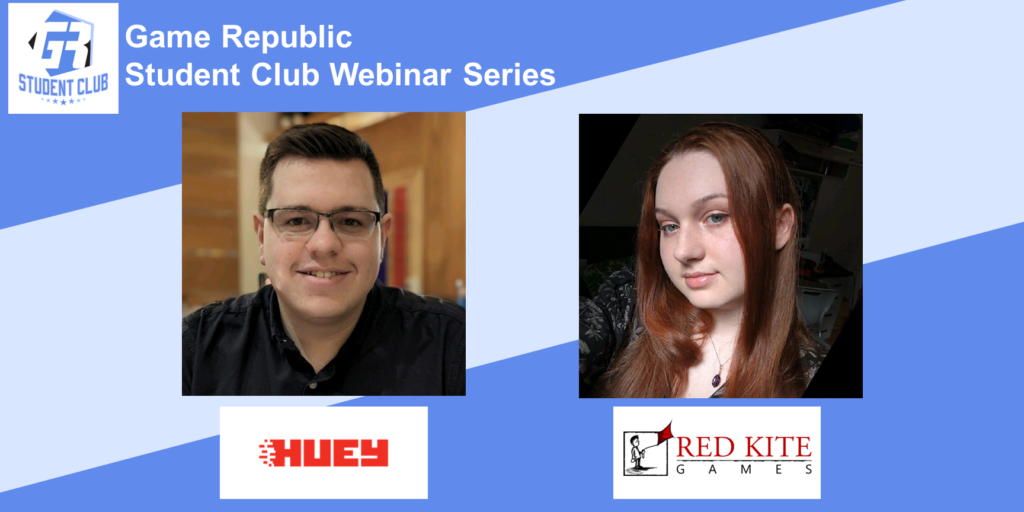
The 11th March saw the Game Republic Student Club hold another informative webinar, hosted by Community and Events Officer Michela Vilinksis with special guests James Easton (Senior Programmer at Huey Games) and Hollie Walton (Technical Artist at Red Kite Games). The session focused on Junior roles in the Games Industry, looking at standing out in your role, effective communication and collaboration and building strong foundations to help you succeed. The event forms part of the 2026 Game Republic event programme supported by Red Kite Games, Xsolla and Double Eleven.
Below are some of the key takeaways from the session we thought we would share…
Getting Started in the Games Industry
The webinar highlighted that breaking into the games industry is primarily about demonstrating potential rather than expecting to be a fully polished developer. Employers focus on a range of skills and qualities when looking at candidates for junior roles, typically looking for curiosity, enthusiasm, and a consistent willingness to learn and improve. A strong portfolio remains one of the most important assets, but these are most effective when it showing ongoing development rather than only finished work. Engagement with the wider games community whether through events, online spaces, or personal projects was identified as an avenue that can help candidates stand out and show genuine commitment to the field.
“You’re not going to be expected to be able to do everything perfectly… you should be eager to learn. Make sure that you are showing people what you’re working on, what you’re passionate about.” – Hollie Walton
Technical Foundations and Effective Communication
A key focus was the importance of developing practical, industry-relevant skills that go beyond academic learning. Many graduates often lack familiarity with essential workflows such as version control, collaborative development practices, and optimisation techniques. Understanding how games are built in studios where multiple people contribute to the same project over long periods is critical. Experience with real production tools and pipelines was another area identified at being able to significantly improve confidence during interviews, overall making the transition into a junior role much smoother.
“When it comes to things like version control, you really need to have a good understanding of how to use it effectively but also why it’s important to use it overall. If you’re able to do this and communicate effectively, concisely and clearly to your team…we don’t have to worry about you.” – James Easton
Communication was identified as one of the most important non-technical skills for junior developers. Being able to clearly articulate ideas, document work effectively, and engage constructively with teammates is essential in a collaborative studio environment. Regardless of role or level, clarity in communication helps prevent misunderstandings, improves workflow efficiency, and builds trust within teams. Strong communication skills also make it easier to receive feedback and integrate changes into ongoing work without friction.
How to Build Resilience and Network Effectively
Explaining rejection is often a normal part of entering the games industry, especially at the junior level, students were reminded that it’s important to build resilience as part of an overall plan to build success. Stating that persistence, combined with a willingness to seek and act on feedback, often leads to success. The One thing that was made clear, rather than viewing rejection as failure, it should be used as a tool for improvement and refinement. Networking also plays a significant role, as the industry is highly interconnected. Building relationships through events, online communities, and professional platforms can open doors to opportunities that may not be publicly advertised.
Final Takeaways
The core message throughout the session was clear, breaking into the industry isn’t about having everything figured out, it’s about showing that you’re ready to learn, contribute, and grow. By building practical skills, understanding real-world workflows, and making steady progress over time are key, alongside strong communication and collaboration. Showcasing both your work and your thinking helps you stand out, while resilience, openness to feedback, and active networking all play a crucial role in creating opportunities and long-term success.
Students from Game Republic Educational partner institutions have access to a variety of webinars, a dedicated discord community and can also field teams for the Game Republic Student Showcase, students can attend the GR Careers Conference 18th June for free and meet industry at the event to get advice on portfolios, CVs and more.
If you’re a student studying at one of our educational partner institutions and haven’t joined the Game Republic Student Club Discord, you can do so here.
If you are interested in becoming a Game Republic member, affiliate or educational partner to come to events for free, get business development support and join the network you can apply to join Game Republic here.
If you like this post, please help us by sharing it!