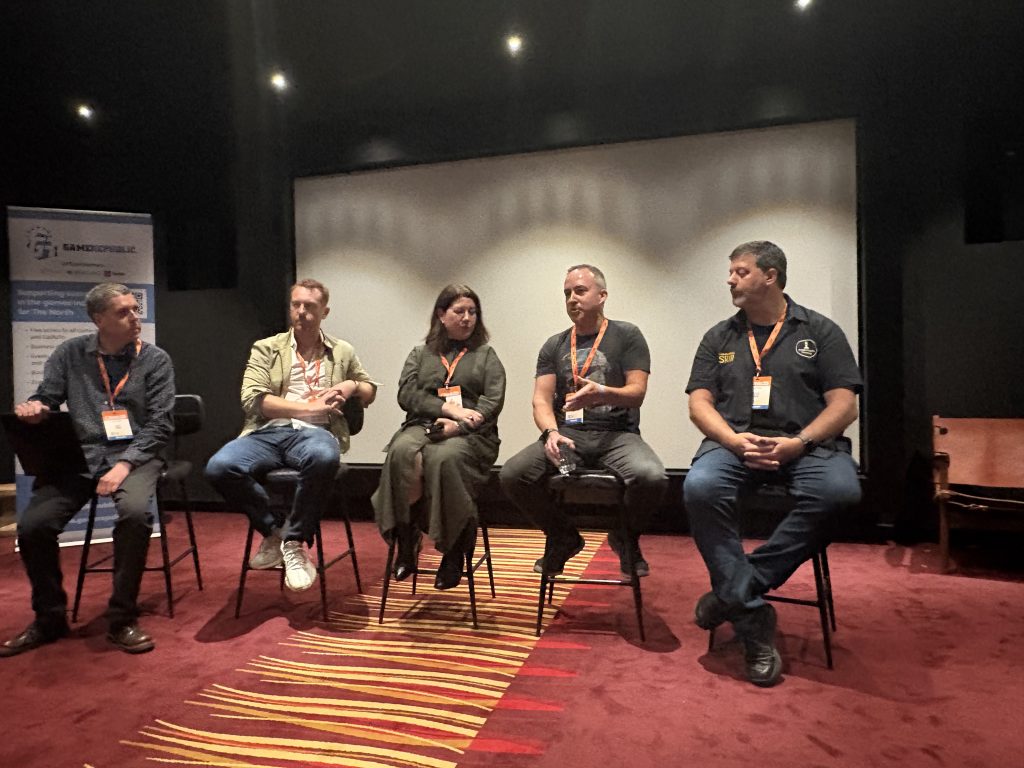
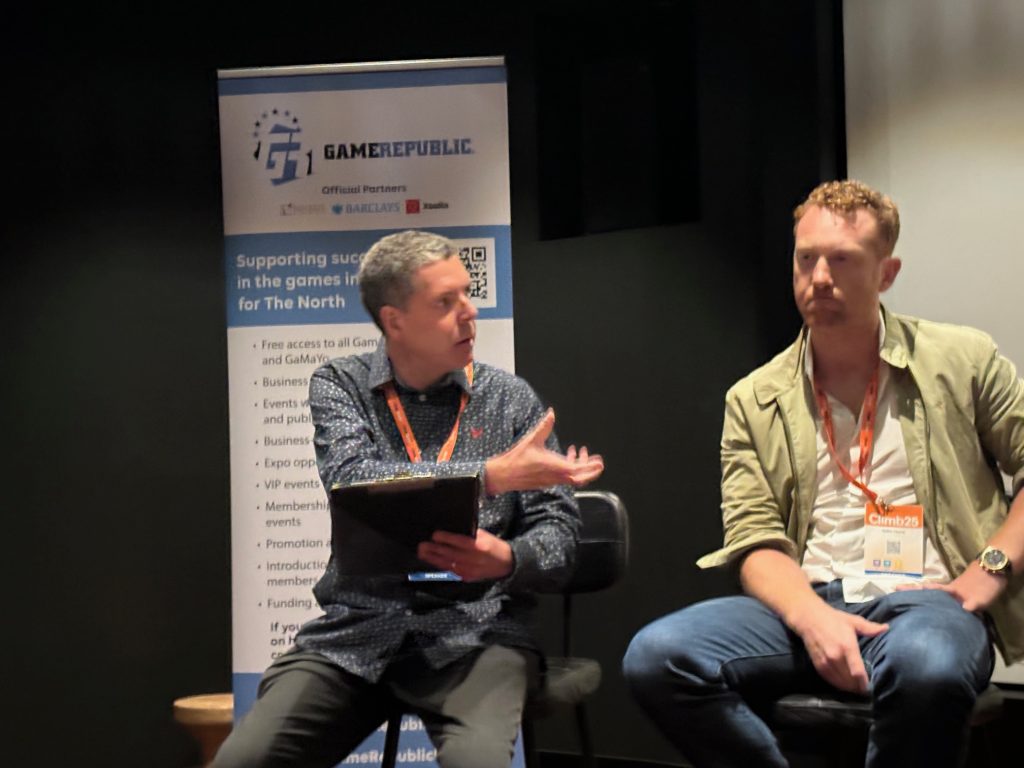
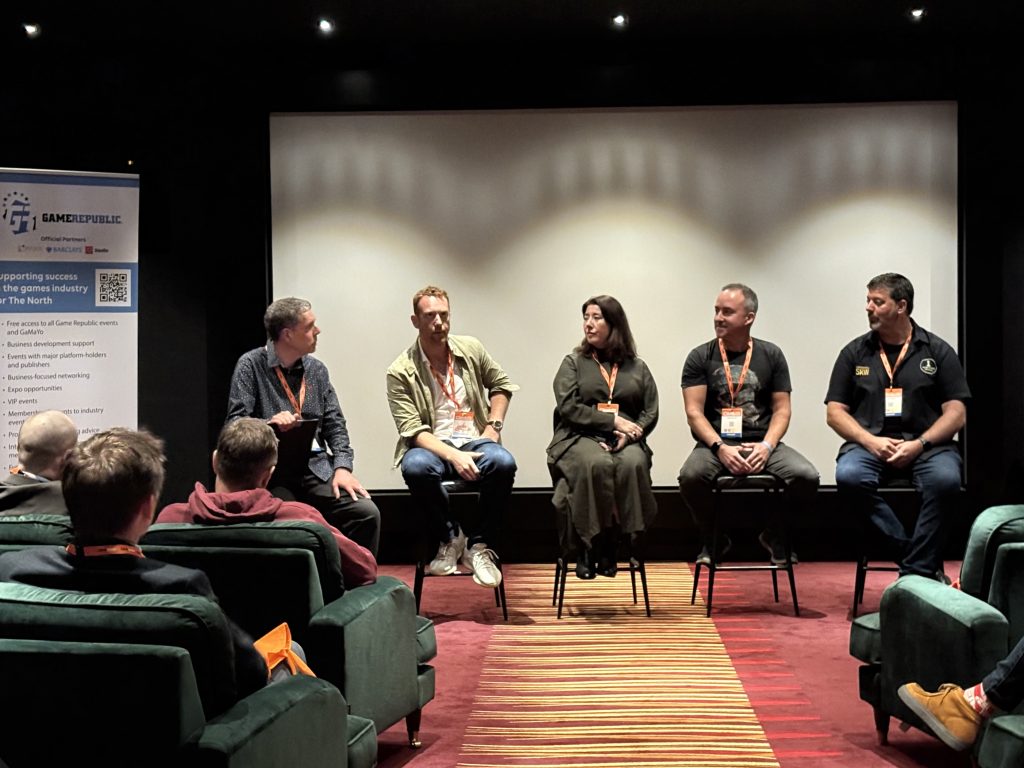
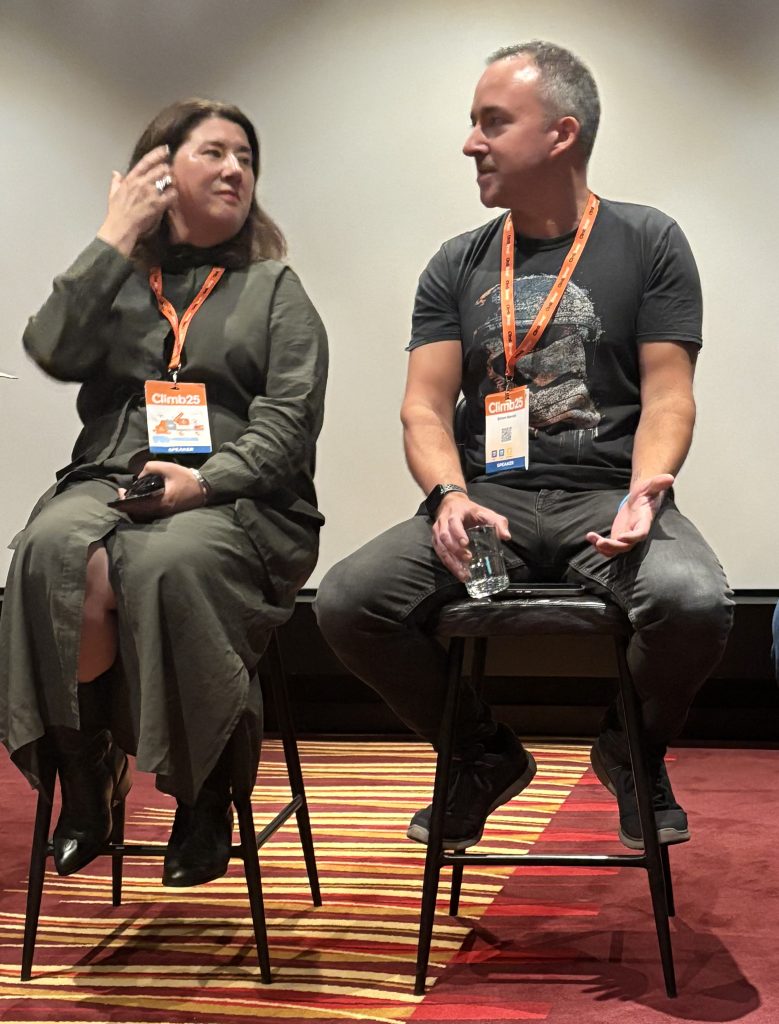
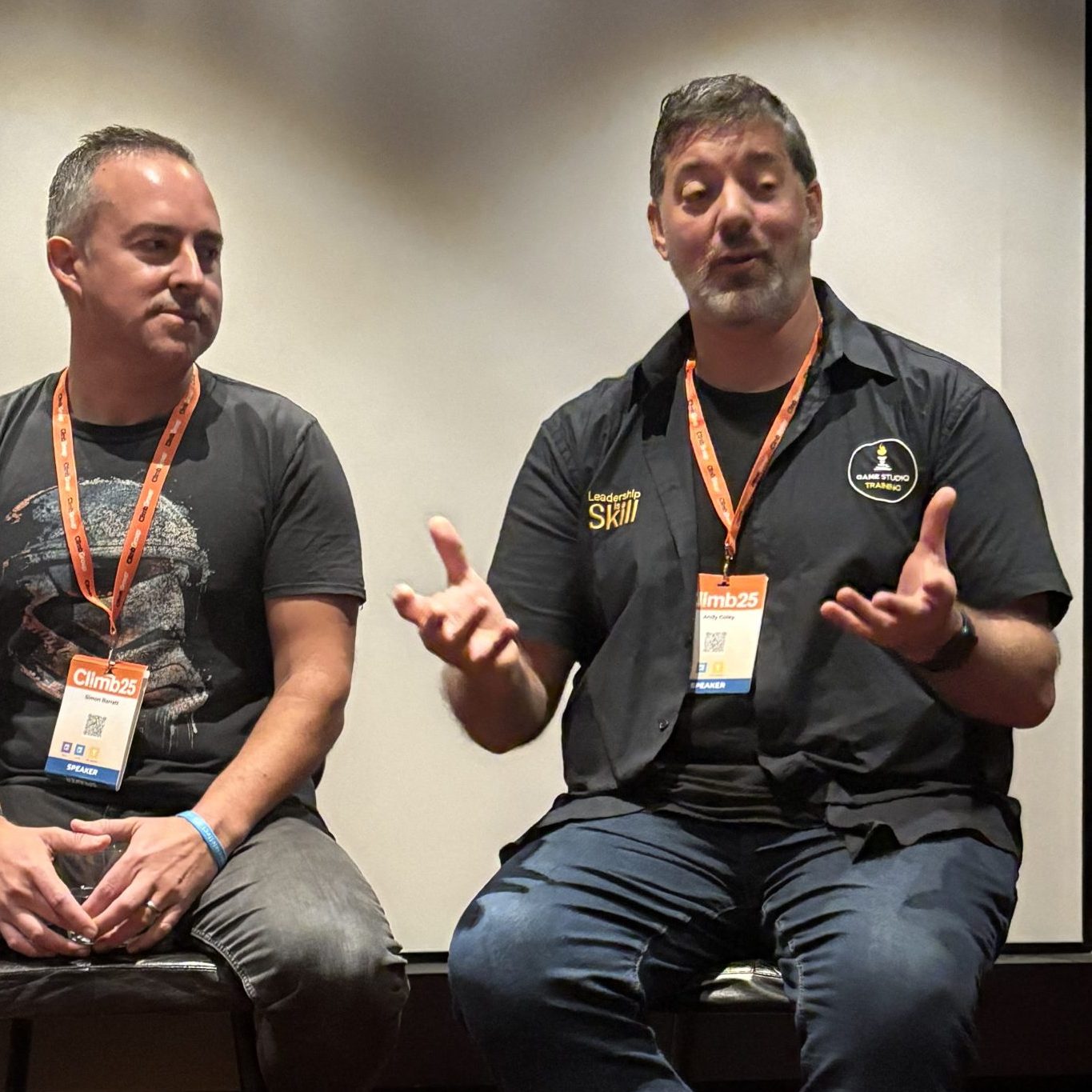
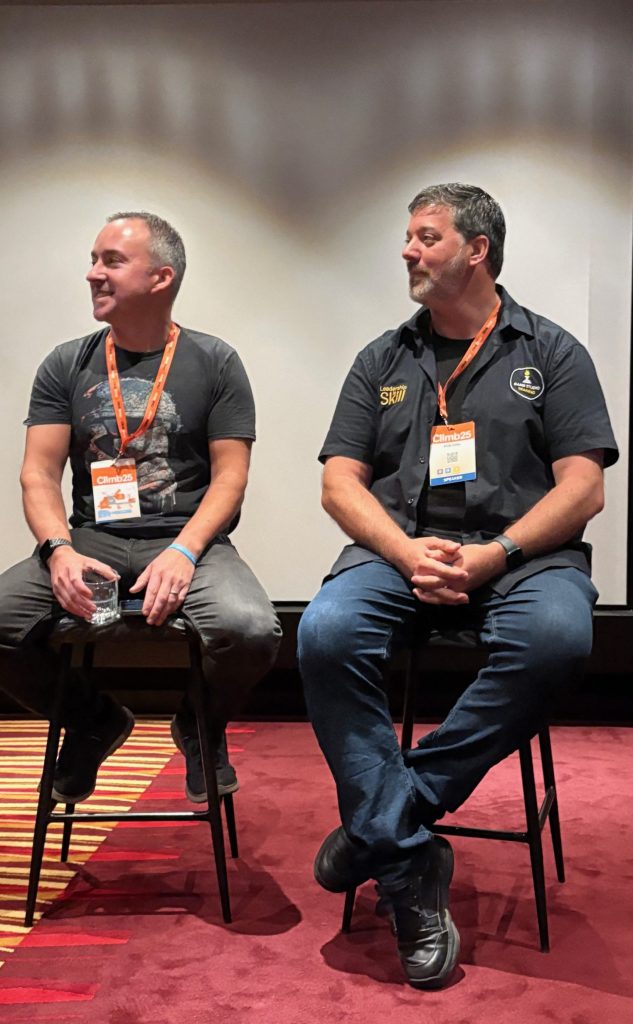
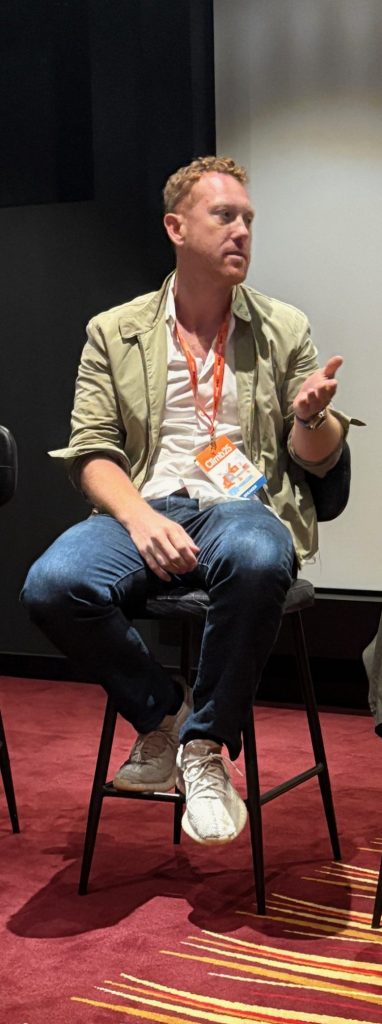
Game Republic hosted a special Investing in Games panel at Climb25 on 2nd July in Leeds. The panel included Spike Laurie (Hiro Capital), Laura Harper (Lewis Silkin), Andy Coley (Leadership is a Skill) and Simon Barratt (Cooperative Innovations/JECO) and was chaired by Jamie Sefton, MD of Game Republic.
The panelists shared practical insights to help the attendees who included investors, accelerators, educators, legal and financial experts and game studios. Some great examples were shared and tips including examples of investment types and how to approach investors, types of expected returns, challenges on track records and much more. The event was followed by a lunchtime mixer sponsored by Leadership is a Skill where attendees were given a chance to continue the conversation.
Here is a taster of the answers that panelists gave on the current investment landscape for games, attitude to failure, the Government’s industrial strategy and new investment models as well as the importance of teams – all very useful information and context for new studios and new investors in games.
What is the investment landscape like in games?
Spike – I think it’s a great landscape if you’re an investor, but you’ve got to know what you’re investing in. It’s definitely a difficult time for the industry as well, and we’re in a downturn post in terms of consumer spend across the board. I think when you look at the predictions that a lot of the funds that a lot of the investors made, where games would go, post COVID, the line went sort of up and to the right, very aggressively, but the reality is that it has plateaued.
There’s been a huge number of teams making games. There’s been a huge number of teams, that have been funded to make games when we had a low interest rate environment. We had plenty of people to help making games, funded by strategics – the Tencents and NetEases of the world. Publishers spending a lot of money as well.
The reality is that a lot of those games weren’t successful, they were part-funded, distribution is super hard at the moment, and there’ll be some more announcements coming in the next few weeks and months and for teams closing and more layoffs, but we’re coming to the bottom of that economic cycle.
There was a lot of waste in the system, money being spent that shouldn’t have been spent. But as we come through that economic cycle, we see the people that are making games now are not just good at making games, they’re excellent entrepreneurs. They’re founders, they’re scrappy, and they’re using the best tools today, which is AI and things like that, to make their games development more efficient.
What can game companies do to be more investable?
Laura: Investors are looking for an attractive commercial proposition, something that is scalable, and which is going to give them a good return on their investment. Within that, as well as the financial metrics that support those aims in terms of profitability and projections, you also have the contractual, IP and compliance/ governance framework which is equally as important. This being the case, some things that you could look at or consider when you’re looking for investment are:
Owning your Intellectual Property (IP) – assets from concept art to software code – make sure that they are locked down as far as possible, particularly when you’re dealing with external games service companies or freelancers.
Look at your licenses – don’t be tripped up by the licence agreements you have, for example licences for game engines or for third-party IPs. Make sure you agree the right scope of for your licenses, which enable you to scale in the way you want to and which don’t restrict future plans.
Make sure that you are on top of compliance obligations. As an industry, we are increasingly in the regulatory cross hairs, so you need to understand data protection, online safety and consumer law as non-compliance can directly impact revenue and profitability. To support this, adopt good internal governance because that will help you comply and make the whole due diligence process much easier.
And be familiar with your key contracts including contracts with talent. Talent is key to your business, whether it’s your employees or third-party freelancers, so make sure those contracts reflect what your requirements are going forward and include terms which protect your studio including solid IP, non-complete and confidentiality clauses.
And when you’re negotiating the terms of your publishing agreements, you may want to make sure they don’t prevent or prohibit any kind of investment. So for example, look at your termination and change of control provisions and make sure that those publishing deals are “investment friendly”.
Diverse revenue can be attractive to investors so consider having a mix of revenue sources to show resilience and growth potential. So for example, a combination of work for hire and own IP could be attractive or a diverse revenue model for publishing and distribution of your game.
 What is pitching to investors like at the moment?
Simon – It’s a lot of work, a lot of travel, a lot of chatting to people, getting the messaging right around what you’re doing. Spike and Laura touched on the diversity of revenues. It’s making sure you survive to make another bet, right? So all investment and all things you’re doing as a company is about making more and more bets. So that’s a new title you’re working on or a new contract, where it is, seeing where the market’s going. And so it’s about effectively building a great team, having that team have opportunities to build great stuff and that survival’s how you end up getting some hopefully profitable and good games out there at the end of it.
But all the travel and pitching takes you out of the business, so how do you manage that?
Simon – I think it’s difficult times as Spike touched on but ultimately games still need to be made. Technology still needs to be developed. There’s still great people doing cool stuff in the UK and The North especially has always been innovative and quite scrappy in terms of stuff done, right? We’ve got a great ecosystem here and people are wanting to do the right things and build interesting games and tech. We’re finding funding needs to be more diverse now, so you’re looking at co- development project funding right now for co-op and we’re not just going to a publisher anymore. We’re thinking, well publishers are not doing full investments, so where do we get the additional bits of cash to do that? Obviously it’s great to see the announcement from Government in terms of the UK Games Fund. We should see in the Autumn budget, hopefully more VGTR (Video Games Tax Relief), as we’ve seen indie TV and film production getting uplift of their tax debits, so if we see that same thing mirroring games, then you could get loans against 50% of your tax back on your game, which means you can cash flow yourself. This means keeping more revenue split when it comes to releasing the game. It’s a lot more ducking and diving and a lot more fees being paid out to legal and accountancy firms, but it’s probably a good thing for your business at the end of the day because that multiple is massive.
Jamie – It’s great to hear about the continuing games tax relief, because in other parts of the world, like Canada, they are actually scaling back on that stuff. I was talking to the organisation Game in Germany that were like the equivalent of Ukie and they’re saying they’re quite envious of our tax credits and they don’t have the same thing in Germany. So I think there’s a lot that we’re getting right with the landscape.
“you do have to manage relationships and make sure that you’ve got good communication …Because when stuff’s working really well – everybody loves it and it’s all great. But when you have to make the tough calls, whether you want to get investment from this VC and the other person in the company doesn’t – that’s when the fractures start to come and it’s really important to make sure you get support for that.”
Andy Coley, Leadership is a Skill
Do investors do look at the team very much when considering investment?
Andy – Yeah, the team’s really important, I’m sure Spike will probably attest that it can be as important as the IP itself. You want the team to be functional and if the team isn’t functional, then down the line, what’s going to happen to that team? And games companies are quite different to a lot of other organisations. They start sometimes as half a dozen people who maybe met at a university or may have been made redundant together. You come together to form this new game business and craft away and spend a year or a couple of years making this amazing game. Then they’re getting some money in and four people becomes 20 becomes 80, becomes 200. Now all of a sudden you’ve still got that same core set of people that maybe don’t have that much skill in leading and managing now in charge of this multi-million pound business, making these kind of decisions.
Most industries, you don’t start like that. I’m probably not going to wander out to tomorrow and start a bank or start a hospital, you know? But in the games business, you can start a business quite quickly and get a lot of money. You don’t go from being a junior to a mid to a senior to a lead, to director, to then, you know, being in charge of that kind of money. So I think it’s really important that companies recognise that even the people they start the business with, might not be the people that they will be with at the end. I remember watching an interview with a studio founder that started with just a few people and now has nearly 2,000 across several studios. When they started, it was with family members and friends and they got to a point with that business during the early expansion phases where they recognised that in order to get bigger, they needed to start to let people go and some of those people were family members.
So you do have to manage those relationships and make sure that you’ve got good communication – you have the difficult conversations that you’re not hiding stuff away. Because when stuff’s working really well – everybody loves it and it’s all great. But when you have to make the tough calls, whether you want to get investment from this VC and the other person in the company doesn’t – that’s when the fractures start to come and it’s really important to make sure you get support for that.
 How can you convince non typical games investors to invest in games?
Simon – I wouldn’t try and educate investors who aren’t investing their games. There are angels. We have got a great ecosystem of angels in the game industry and the great thing about angel investing is it’s not about those big returns. These people are already wealthy. For a lot – it’s about going on the journey with you.
Laura – Yes, there are some great angel investors out there who have successfully exited their own games companies and studios. They understand games so they can provide helpful advice as well as investment. And actually, if you haven’t got a huge amount of experience in the industry then consider putting an advisory board together. That can really help you and then provide that industry integrity and advice that you may need.
Simon – And the angels get 50% of their tax back if you are SEIS. So with AI and the future and how we interact with stuff, games, games adjacent tech, and their skills, and how you interface with 3D worlds and everything else, that’s what games has been doing for 25 to 30 years. That is the future of how we’re going to interact with anything, whether it’s spectacles or films or whatever else. We’ve worked with McLaren cars, with the BBC, in films, and with other people who are adjacent to our industry using the same technologies, and that is games knowledge and tech. So I think even if they don’t want to invest in games – investors are finding themselves investing into games tech or games adjacent anyway..
So if you’re a business where you have you’ve been an entrepreneur, you’ve had a business start-up and it’s failed, where do investors sit with that? Because in America, you always hear that actually people say that’s a badge of honour, you know, if you’ve gone through the mill, you come out the other side, you’ve learned all the lessons?
Spike – I don’t see that in the UK. I see fear. It’s conservative. My pet theory for that is because in the US, in the Wild West it was built on oil, and you could strike into the ground and not get oil. That didn’t change your odds of finding another patch and striking to the ground and getting oil that time, right? It’s that kind of mentality. Whereas when you look at the British sensibility, it’s much more conservative, which is a shame because failure is actually how you learn and actually how you improve as an entrepreneur as a person.
 So you wouldn’t judge someone if they had had run a failed business?
Spike – I think if someone had 10 failed businesses, I might say, look, you’re just not a lucky person. I’m looking for someone a bit luckier. You invest based on the expectation that learning has happened after failure.
Andy – You need to be wary of borrowing money and people losing it on your ventures as that can just sit there and impact your relationships. You can learn an awful lot from failure.
Last week the Government published its industrial strategy Did you like it – what was missing?
Simon – I’ve been on the Ukie board for 10 years now and there’s a lot of work that’s been done by Creative UK and other trade bodies such as Game Republic. Four years ago we drafted our manifesto document, which effectively was the paper that was released, and that was really positive to see. The one part that was missing was the VGTR improvements around indie games giving up to 50% tax rates there. That is because it’s a fiduciary kind of change rather than purely support, that wouldn’t be till the Autumn budgets, that was the one thing that was missing probably. And an extra zero on the end of some of the funding would have been good too.
What kind of questions should you ask a potential investor?
Spike – I think it’s very simple just be like, what sort of stuff do you in do you invest in? What cheque size do you want? What are you looking for right now? And then you can very quickly gauge whether that person’s a good investor for you or not. But don’t be afraid to go and speak to people and ask those questions, because investors are here at events because they want to find the next big thing, right? So don’t ever feel like you’re wasting their time or anything like that because that’s their job.
This panel took place because of a partnership between Game Republic and ClimbUK.
The panel and lunchtime mixer was sponsored by Leadership is a Skill – visit the website https://www.leadershipisaskill.com
To find out more about Game Republic events or to get involved in the network get in touch – gamerepublic.net/join-us
If you like this post, please help us by sharing it!