Members of the the Great Northern Games Discord attended an AMA chat with Game Republic Affiliate Nathan Edmonds (Founder and CEO of Get In, a creative marketing agency). The session was centred around social media management and communications.
The event formed part of Game Republic’s activities for 2026 supported by Official Partners Red Kite Games, Xsolla, Double Eleven and Strategic Partner Steel City Interactive. Here are some of the key points from the session…
When to share games on social media
The main piece of advice shared was not to wait until your game looks finished before posting. Start sharing early concepts and content from behind the scenes of creating the game as soon as possible. It can take around six months to build significant investment in the community for a game, so more time the algorithm has to find an audience, the more wish lists you can collect before the games launch, which is beneficial for funding and showing clear engagement and demand.
‘‘We speak to many brands and so many people think their process isn’t cool or isn’t social worthy, when it absolutely is. Behind the scenes content and showcasing the process is crucial, people don’t just want the finished product, you need to provide context.’’ – Nathan Edmonds
Aesthetics still hold some importance as visually appealing posts will gather more engagement. Focusing attention on visuals and posting without a paid boost is a good combination when showing the process of creating an indie game.
Being authentic as an Indie Developer
A common mistake highlighted during the chat was not being personal enough when creating content that showcases a game, it can be much harder to engage an audience when appearing as a polished brand. Personalisation is what makes people care, and it’s what makes them stick around when the game is still a work in progress. For example, if you are in a band, posting about an upcoming gig can help significantly to appear more personal online.
“People get attached to people, people don’t get attached to brands. it could just be your voice but adding that level of personality is important.” – Nathan Edmonds
Another key point discussed during the chat was to not constantly push for the audience to wish list a game. It is crucial to balance it with content that has humour or that focuses in on specific parts of the game making process.
Tailoring Content to Each Social Media Platform
There’s no one-size-fits-all approach to social media. TikTok is becoming increasingly important for game marketing, as well as Twitch streams and YouTube, but each platform needs its own approach. What works well as a quick TikTok clip won’t necessarily receive as much attention on LinkedIn or YouTube. Short-form content is huge right now across most Social Media platforms; however, it needs to be adjusted for each one to gather the most audience engagement. A bit of luck helps but posting consistently while being realistic is key when creating content for an indie game.
“I would say consistency is the priority. Whilst quality is important, short-form video content is rough around the edges. Do not purposely go out of the way to make it rough, just be authentic and put something together. Don’t overthink it and pop it out there.” – Nathan Edmonds
There Are No Shortcuts
When building a community, there’s no instant shortcut to success. A Steam festival with 1.5 million impressions can convert to a few hundred wish lists. It is essential to branch out and try different types of promotion to see which ones work for the game. Forms of game promotions such as paid ads only work on top of a solid foundation audience that are already showing interest in the game, so build trust and then paid ads as a reminder to people who already showed interest, rather than as their first introduction, as it removes the personalisation associated with the game. Micro-influencers can also be useful when promoting, instead of chasing the biggest names, send them promotional items and allow them to talk about your game freely to review it.
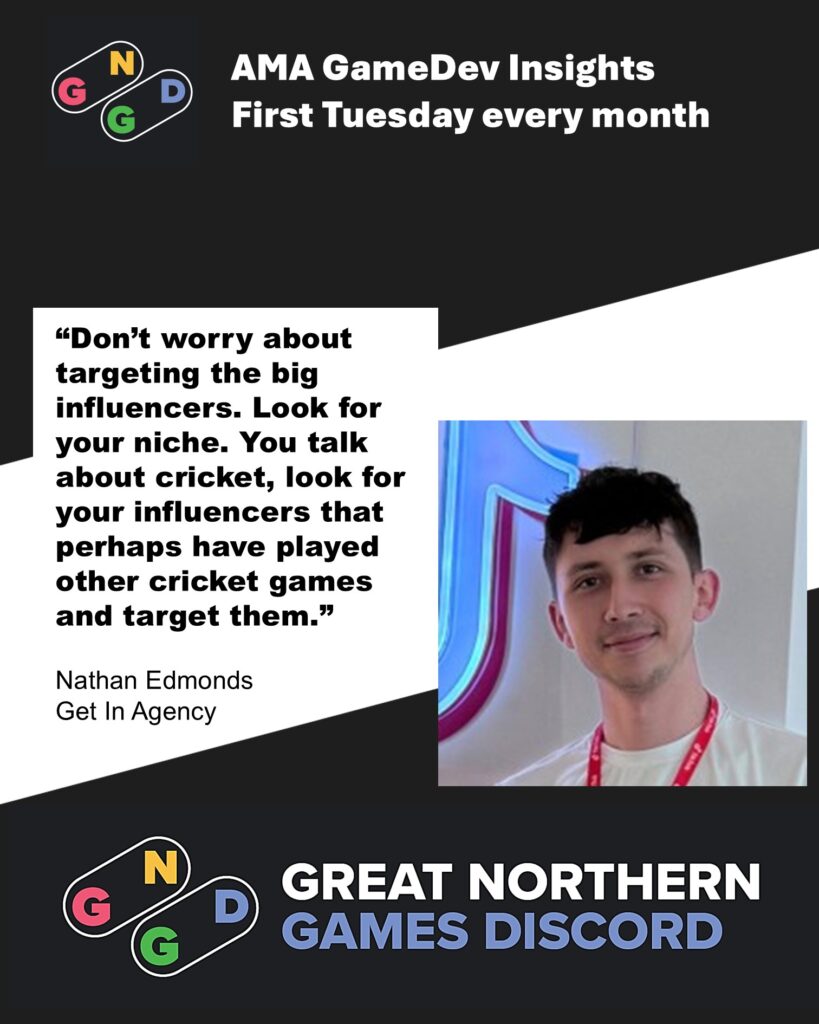
“Don’t worry about targeting the big influencers. Look for your niche. You talk about cricket, look for your influencers that perhaps have played other cricket games and target them.” – Nathan Edmonds
Final takeaways
- Building a community is a long task that requires a lot of effort and consistency.
- Start posting early, before the game looks fully finished, and give enough time before the games launch to establish a viable audience and build wish lists.
- It is important to appear as a a person, not a brand.
- Share the process of creating the indie game, behind the scenes moments, and overall be authentic.
To find out about this and future Game Republic events and webinars as well as games industry events visit the events page.
If you would like to secure a free ticket and get access to GR in-person events for free and business support and access to our webinar recordings of full sessions with other experts including Valve, Other Things, Eaton Smith, Lewis Silkin, Johnston Carmichael, Plus Accounting and more – you can apply to join Game Republic here
If you are developing or supporting games in The North, you can join GaMaYo, other Northern meet-ups and the Great Northern Games Discord for FREE here
If you like this post, please help us by sharing it!