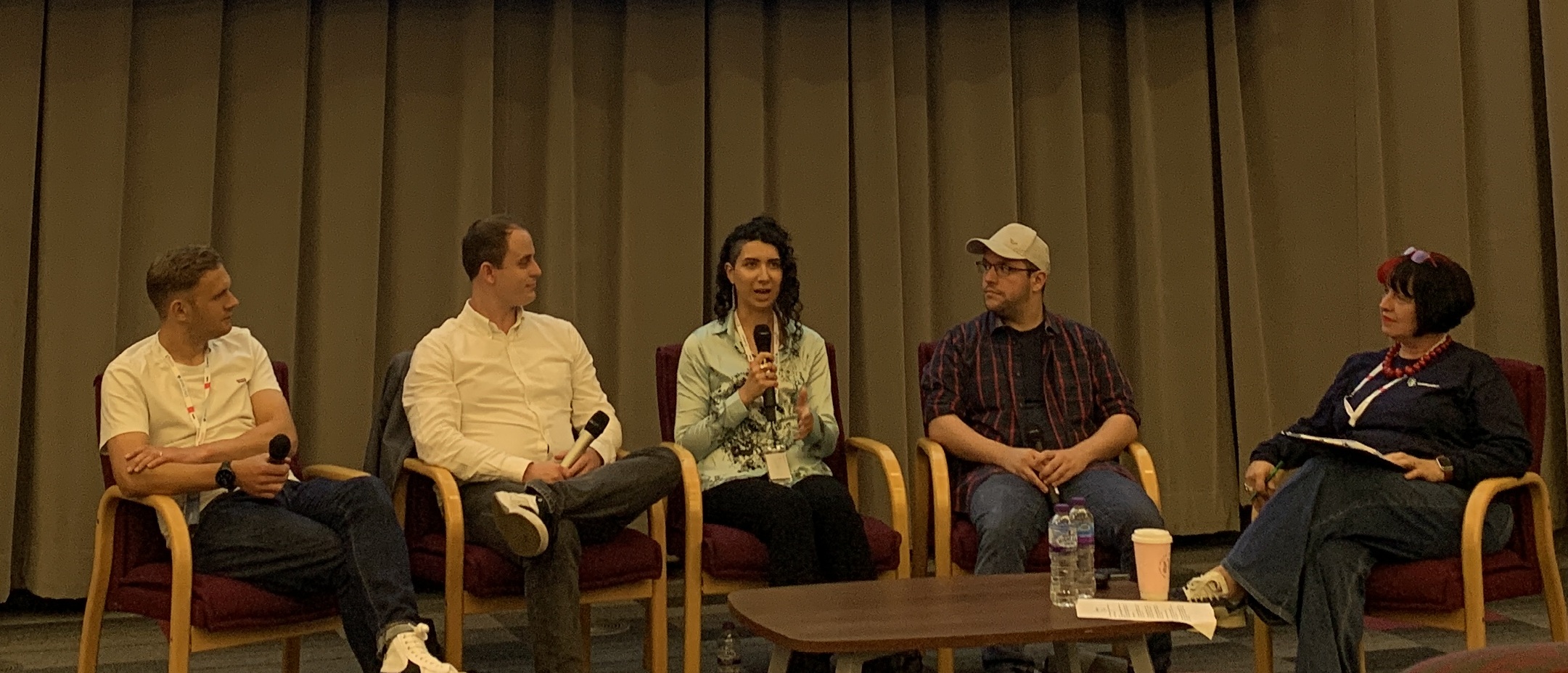
Game Republic hosted a panel discussing the complexities, benefits and tips for working as a contractor/freelancer in the games industry. The panel took place on the 18th of June at Sheffield Hallam University. The panel, chaired by Dr Jackie Mulligan included Sam Crich, Eaton Smith, Tom Leighton, Operations Manager at Atom Hawk, freelance character artist Reinaldo Diaz, currently working with Rebellion and Areus Dashti, freelance character artist with clients including Phantom Coast and Antler Studios. We asked graduate Michela Vilinskis to summarise the insights.
The panel covered topics surrounding freelance and contractor work such as contract writing, setting boundaries, managing clients, workload management and knowing your worth. Here’s just a few of the key takeaways…
How do you become part of this network of people that clients can reach out to, what do you need to have?
Tom shared that a key was good portfolios, highlighting your work clearly, giving clients a concise understanding of the work you can produce. Adding further to this, Tom also shared the importance of being responsive in communicating with potential clients, stating communication is key and can help both contractors and clients understand how effectively someone can work.
Areus agreed that, along with a strong portfolio that communication is the best skill to have, especially helping to build trust and good working relationships with clients.
How do you do you manage clients and workloads?
Reinaldo shared the struggles faced when he initially started and highlighted that it was important to understand your own limits. He emphasised that understanding that it was important to look at jobs and gauge workload time limits to avoid work resulting in projects over running or racing to finish on time. He said that this was especially important as a freelancer managing multiple clients. Reinaldo reassured attendees that being capable of pacing workloads comes with time and confidence but more importantly understanding project requirements plays a crucial role in managing them.
For Areus, their experience focused on trial and error in most cases when Areus started out – having a network of mentors and other contractors to ask for advice/assistance was certainly a valuable asset. Having this network helped with avoiding underselling your work, setting boundaries with clients or dealing with impact of additional client feedback on project time limits and workloads.
What advice can you give to people regarding freelance work?
Sam emphasised how making sure there are defined deliverables and managing expectations was crucial. He also advised that the most professional way of dealing with things in some circumstances might even involve telling clients whether something is feasible or outside your skillset, or even in instances where delays will occur. He discussed how this could also lead to feeling like you’ve failed, especially in the beginning but it was an important reminder that setting clear expectations for clients is imperative. Speaking in reference to contracts and how these should be handled, he outlined that a good contract should set expectations for both parties from the outset including what the work entails, what the client requires from you and if needed, classification on what work would not be included. He summarised this stating that contracts should be designed in a way that allows both parties to have clear and concise information on what is expected from each side.
How do you keep motivated?
For Areus, setting a clear schedule was an easy win when it comes to keeping motivated. Saying that this helped to lessen the feelings of being out of control and helped to visualise workloads, preventing the potential of saying yes to work anytime it is asked. Areus highlighted the significance of strict routine was key, but also it was important to take advantage of the freedom of being a freelancer. Advising that care should be taken regarding the traps of working unmanageable hours on a weekly basis on the back of taking on too much work but at the same time, managing enough workflow to ensure enough is planned for the month to prevent financial struggles.
Reinaldo added that studying more, while being a freelancer helped to keep him motivated. Suggesting that a drawback of freelancing meant you can often be out of the loop in regard to industry advancement so keeping a pulse on such things is important. Reinaldo highlighted that this could help motivate you in terms of trying out new techniques, learning new ways to optimise workflows and pipelines.
One thing that everyone agreed on was the importance of surrounding yourself with people who are passionate about the work they do, network with relevant people in industry to keep contacts open for opportunities but remembering that it’s okay to sometimes take a step back and have a break as well as take time to reevaluate.
Students studying at Game Republic’s educational partner institutions were given free access to the Game Republic Careers Conference. To find out about Game Republic and its networks and support visit gamerepublic.net/join-us. If you are making games or part of game development in The North of England, you can also apply to join the Great Northern Games Discord here.
If you like this post, please help us by sharing it!